Best Closet Organizer: Pros, Cons and Alternatives
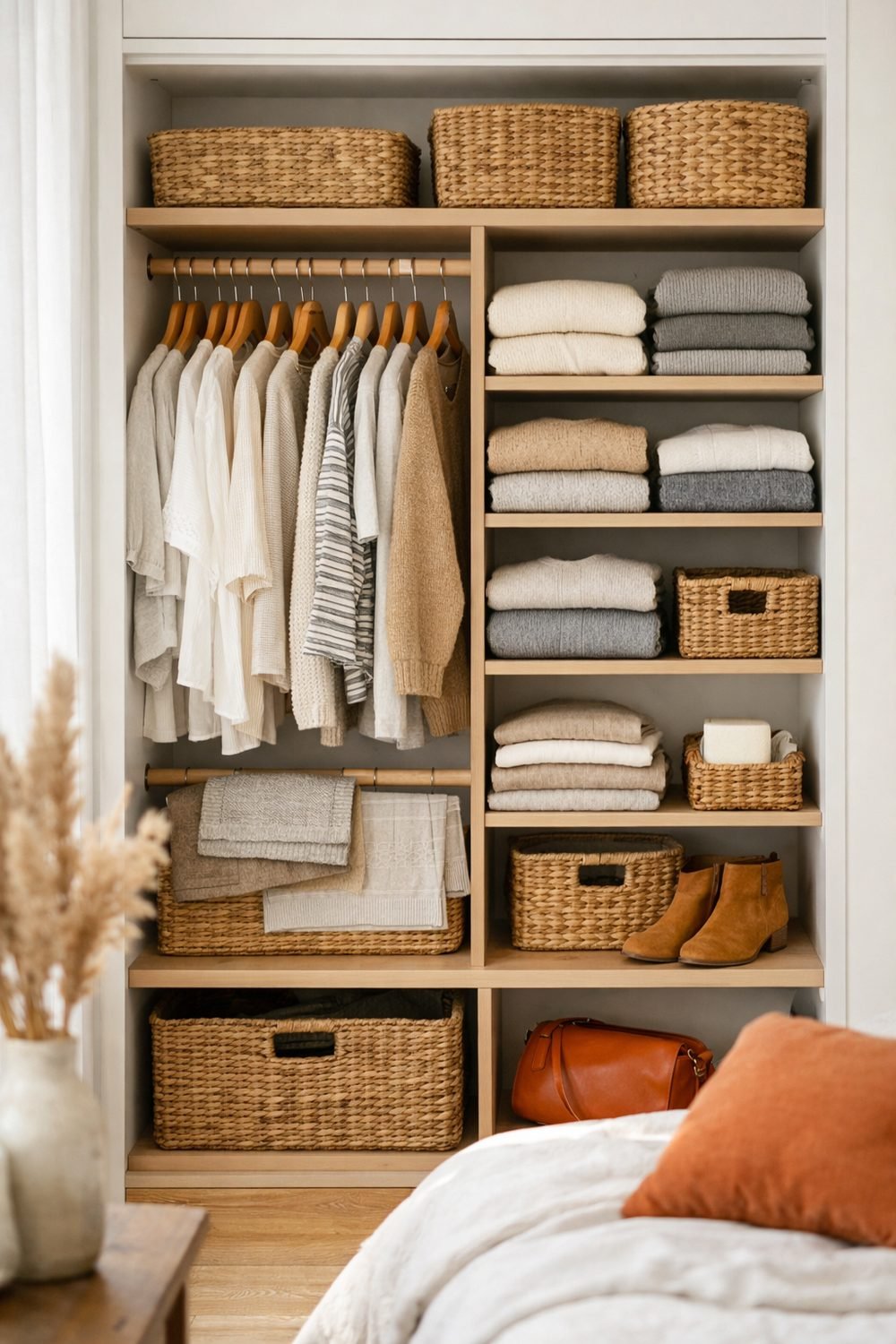
It's easy to buy the wrong closet organizer, and many people do it more than once. The worst was a pretty set of fabric bins that looked great in the photo and collapsed the second I filled them with jeans. The key point is simple: the best closet organizer is the one that matches what you actually store, not what looks nice online.
So before you buy anything, open your closet and take a honest look. Is it mostly hanging clothes? Folded sweaters? Shoes everywhere? A mix of bags and random stuff you don't know where else to put? Your answer points you to the right type. Here are six options, with the good parts, the annoying parts, and what you could use instead.
Short on time? Our top picks: The Container Store Elfa, IKEA PAX, ClosetMaid and Rubbermaid Configurations. See all picks
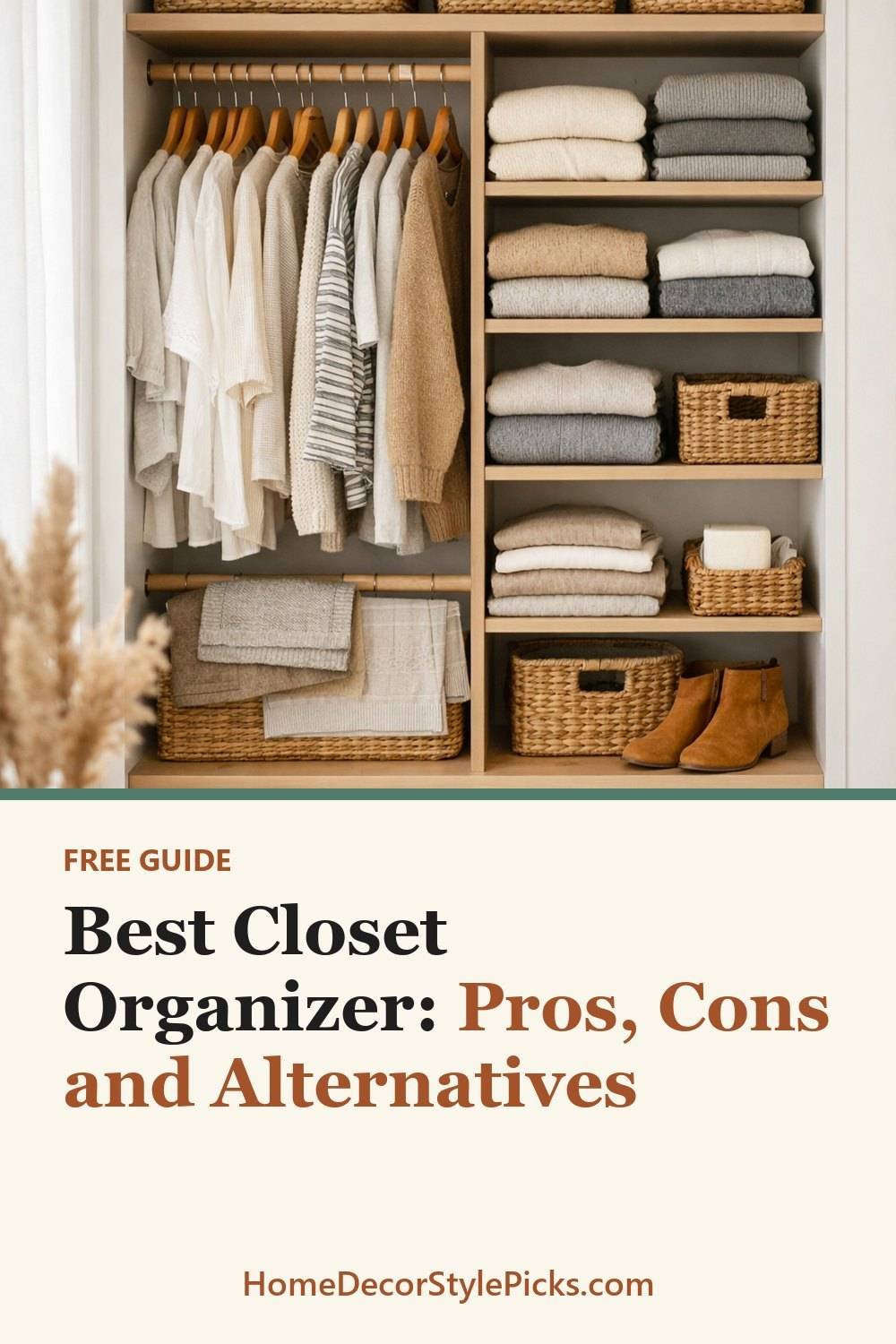
1. Hanging Organizers for a Small Closet Organizer Fix
These are the fabric or canvas shelves that hang from your closet rod with hook-and-loop straps. They turn the empty space under short shirts into five or six cubbies. If you need a small closet organizer and have no shelves, this is often the cheapest fix.
The big pro is that they use vertical space you're probably wasting right now. The con is that they put all their weight on your rod. A heavy load can pull a cheap tension rod right down, even in the middle of the night. Not my favorite wake-up call. If your rod bends when you push on it, sort that out first.
They also sag over time if you overload them. Folded t-shirts and leggings are fine. A stack of heavy denim is asking for trouble.
Practical tip: Put the heaviest things in the bottom cubby, not the top. It keeps the whole thing from swinging and stretching out of shape.
Alternative: If your rod is weak, a slim freestanding shelf on the closet floor does the same job without hanging off anything.
2. Stackable Bins
Bins are a good option because you can move them around whenever your needs change. Winter scarves this month, beach towels next month. You can stack them on a shelf, slide them under hanging clothes, or pull one out to carry to another room.
The downside is stability. Stack them too high, especially with soft-sided ones, and they lean and tip. Clear plastic bins with lids, such as those from Sterilite, usually stack better than fabric ones. You can also see what's inside, which saves a lot of digging.
Honestly, I think the matching woven baskets you see everywhere are a bit overrated for closets. They look lovely, but you can't see what's in them, so stuff gets forgotten.
Practical tip: Don't stack more than two or three high, and put the bin you use most at the top so you're not unstacking every morning.
Alternative: Shoe boxes with the lids cut off work surprisingly well for small things like socks and belts while you figure out what you really need.
3. Shelf Units for a Bedroom Closet Organizer
A simple shelf unit on the closet floor can make things look tidy fast. Folded clothes, shoes, bags and bins all have a home. It's one of the easiest ways to turn a messy bedroom closet into a calm one.
The catch is floor space. In a narrow reach-in closet, a shelf unit can block the hanging clothes behind it or keep the door from opening all the way. Measure the width, the depth and the height under your lowest hanging clothes before you buy. Skipping that step can mean returning a unit that turns out to be too deep for the space.
Wire shelves are easy to wipe and let air through, but small items can slip between the bars. Solid shelves are better for shoes and little things.
Practical tip: Check that the shelves can be moved up or down. Fixed shelves rarely line up with what you actually own.
Alternative: A small dresser in or near the closet gives you shelves and drawers in one, and you might already have one somewhere in the house.
4. Drawer Inserts
If your closet has built-in drawers, or you keep a dresser inside it, drawer inserts are a small change that feels big. Socks stop rolling around. Underwear and jewelry have their own spots. You open the drawer and can actually find things.
The problem is fit. Drawers come in so many sizes that inserts often leave gaps or don't fit at all. Adjustable dividers that expand to fit work better for most people than fixed trays.
You can skip the super-specific inserts with dozens of tiny squares unless you really own that many small items. They look great in photos and then sit half empty.
Practical tip: Measure the inside of the drawer, not the outside, and write it on your phone so you have it when you shop.
Alternative: Small boxes from deliveries or old phone boxes can act as free drawer dividers. Not fancy, but they work.
Quick side note: if you're organizing more than just your closet, you can grab my free set of 12 pantry labels when you join the email list in the box on this page.
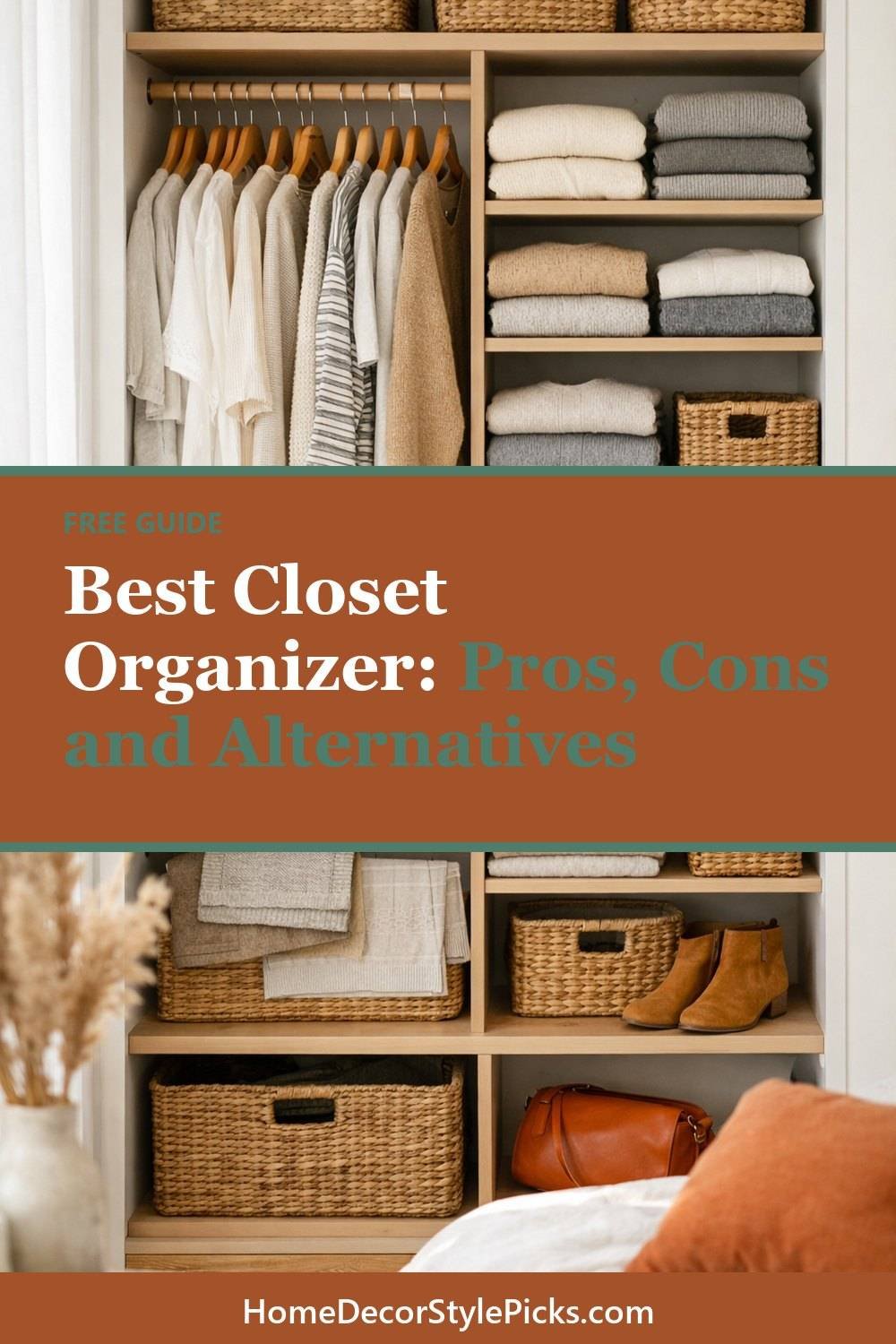
5. Custom Closet Organizer Systems
These are the built-in setups with a mix of rods, shelves, drawers and sometimes pull-out baskets, designed for your exact closet. Some are put in by a professional closet organizer company, and some are DIY closet organizer kits you plan online and build yourself.
The pro is clear. Everything fits, nothing wobbles, and you can plan for exactly what you own. The con is cost and commitment. They usually cost a lot more than the other options here, and they're harder to change later. Prices vary a lot, so check the seller's page for details, and get more than one quote if someone's coming to install it.
My honest take? It makes sense to go custom only after living with a simpler setup for a while. You learn what you really use, and you won't pay for a tie rack you never touch.
Practical tip: Before you design a closet layout for a custom system, sketch your closet and list what goes where. The Kitchen Cabinet & Closet Organization Planner below this post has pages for exactly that, if you like doing it on paper.
Alternative: A second rod hung lower under the first one doubles your hanging space for a small part of the price.
6. Over-the-Door Racks
The back of the closet door is space most people forget about. A rack that hooks over the top can hold shoes, scarves, a few purses or even cleaning supplies if it's a hall closet.
They're cheap and quick to put up. But they can only hold so much weight, and some get in the way of the door closing properly. Mine made a clunking sound every time the door shut until I added little felt pads behind it. Small fix, big relief.
Also check your door. Some hooks don't fit thick doors, and they can scratch the paint over time.
Practical tip: Keep lighter things up top and heavier ones near the bottom so the rack doesn't pull the door forward.
Alternative: Adhesive or screw-in hooks on the inside of the door give you space for bags and robes without a full rack, though an over-the-door option from SimpleHouseware is worth a look if you want more room.
7. Before You Buy Anything: Declutter First
This is the step I wish someone had told me sooner. Every storage closet organizer works better when there's less to organize. It is easy to buy three bins for a closet, clear out what you don't wear, and end up needing only one.
Pull everything out, sort it into keep, donate and toss, and only then decide what to buy. It takes an afternoon, but it saves money and returns.
Practical tip: Keep a running list of ideas and what you've tried. You can use the Organizing Ideas List and Tracker below this post so you don't buy the same kind of thing twice.
Our Top Picks for Closet Organizing
These are well-known options that cover the six types above, so you can match a product to what you actually store. Check sizes and weight limits before you order anything.
The Container Store Elfa
This is a customizable closet system that suits people who want a built-in look without fully custom carpentry. Check how it mounts to your wall or track and whether your closet layout fits the components you want.
IKEA PAX
A modular wardrobe and closet system for people who want to plan their own layout with shelves, rods and drawers. Check the dimensions of your space and whether you are comfortable with assembly.
ClosetMaid
Known for wire shelving and closet kits that suit renters and DIY fans on a budget. Check the shelf depth and weight limits, and remember small items can slip through wire.
Rubbermaid Configurations
An adjustable closet kit that suits people who want a simple, do-it-yourself rod and shelf setup. Check that the kit size matches your closet width before buying.
Sterilite
A familiar maker of clear plastic storage bins with lids, handy for stacking on shelves or floors. Check that the lids fit snugly and that the bin height fits your shelf.
mDesign
Offers a wide range of bins, drawer organizers and hanging storage for many closet needs. Check the measurements against your drawers or rod, since sizes vary between product lines.
SimpleHouseware
Makes over-the-door racks and hanging organizers that suit small closets and tight budgets. Check your door thickness and the rack's weight limit before you buy.
Check current plans and prices on each brand's own site before you decide.
FAQ
What's the best closet organizer for a small closet?
For most small closets, a hanging organizer or a second lower rod gives you the most space for the least money. Add an over-the-door rack if you need room for shoes or bags. Measure first so nothing blocks the door.
Are custom closet systems worth it?
They can be if you plan to stay in your home a while and know exactly what you store. If you're not sure yet, try simpler pieces first and see what you actually use. Check the seller's page for current prices and what's included.
How do I stop bins from tipping over?
Use bins with flat lids that lock or nest, and don't stack them too high. Put heavier bins at the bottom. Clear plastic tends to stay steadier than soft fabric.
Should I organize by type or by color?
You can organize by type first, like all shirts together, then by color inside each group if you feel like it. Type makes getting dressed faster. Color is nice but it's more about looks.
If you're ready to start, here's what I'd do next. Grab the free set of 12 pantry labels by joining the email list, then pull everything out of your closet this weekend. Once you know what you're keeping, take a look at the planner and tracker below this post to map out your space before you spend a cent on new organizers.
Printables and tools that can help
Kitchen Cabinet & Closet Organization Planner
Organize kitchen cabinets and closets zone by zone with checklists and planning...
See detailsOrganizing Ideas List and Tracker
A printable list of organizing ideas with a tracker for each...
See details