Best Essential Oil Diffuser: What to Check Before You Choose
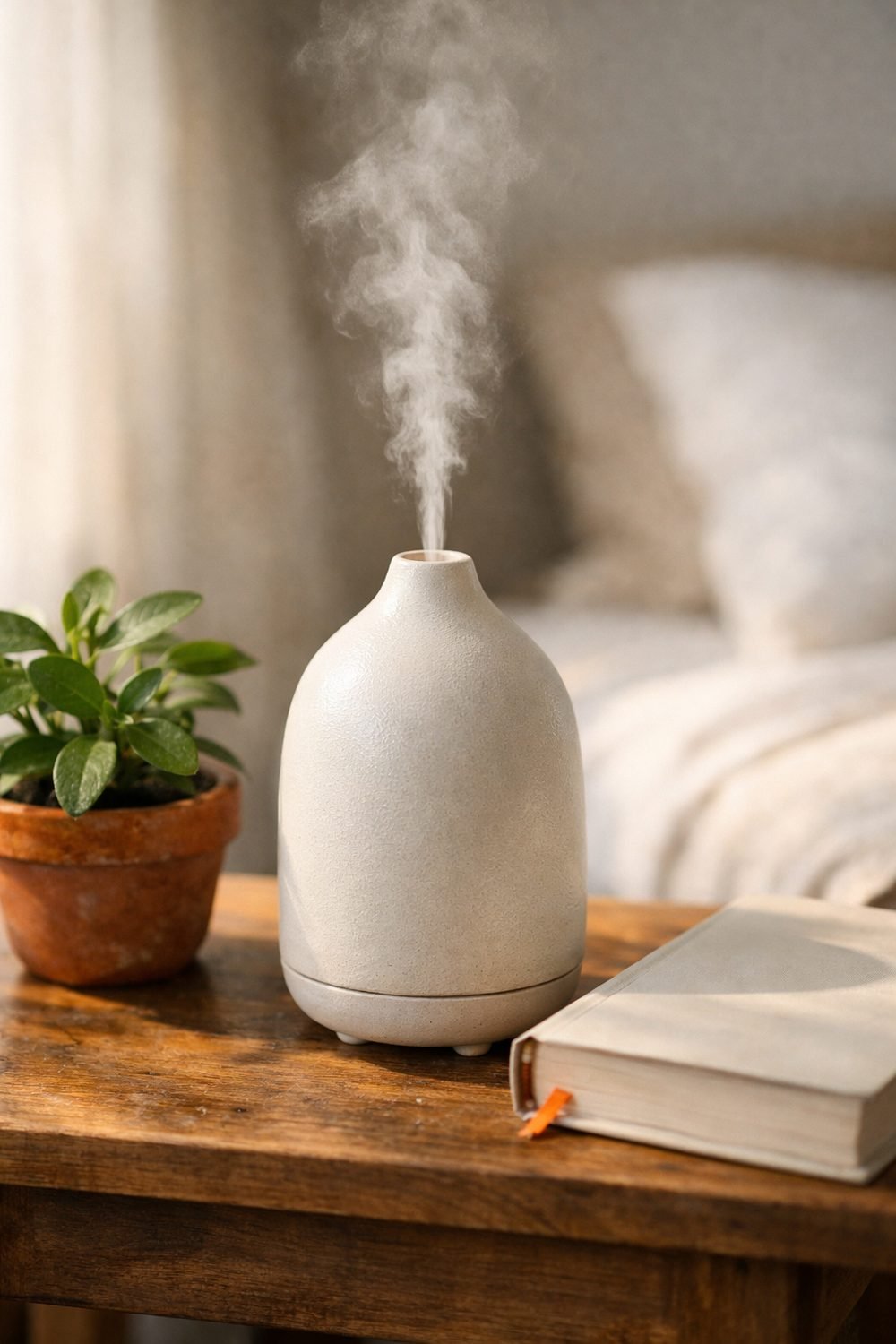
It's easy to buy a diffuser on a whim because it looks nice on a shelf, but looks alone won't tell you how it performs. It was cute. It also hissed like a tiny kettle, ran dry in under two hours, and had a blue light so bright I had to throw a sock over it at night. So yes, the small details matter more than the photo.
If you're hunting for the best essential oil diffuser now, here's what I'd check before you pay. None of this is fancy. Here's the stuff worth knowing before you buy one that hisses.
Short on time? Our top picks: Vitruvi, Pura, ASAKUKI and URPOWER. See all picks
1. Tank Size and How Long It Actually Runs
A bigger water tank usually means the diffuser runs longer before it needs a refill. That sounds obvious, but it changes how you'll use it. A small tank is fine if you only want scent for an hour while you read. If you want it going through a whole evening, or overnight, a tiny tank gets old fast.
Look at the run time the maker lists, and notice which setting it's based on. A lot of listings give the longest time on the lowest mist or the intermittent mode. On full blast, you'll often get less. That's not a trick exactly, but it's worth reading closely.
Tip: Think about where you'll fill it. If the sink is down the hall, a larger tank saves you a lot of little trips. Carrying a slightly heavier tank once is better than refilling a small one three times.
2. The Room You're Putting It In (Best Oil Diffuser for a Large Room)
Most diffusers list a coverage area, usually in square feet. Measure your room roughly, or just guess based on the space. A small electric diffuser in a big open living room will feel like it's barely doing anything. A big one in a small bathroom can be a lot.
It can help to keep one in the bedroom and a different one near the kitchen. The bedroom one is small and gentle. If your kitchen is open to the living room, a small diffuser can get lost in the space, so check the coverage area first.
Tip: If you're stuck between two sizes, go a little bigger and use the low setting. It's easier to turn scent down than to make a weak diffuser stronger.
3. How Much Noise It Makes
This one matters most if it's going in a bedroom or home office. Some diffusers are close to silent. Others make a soft bubbling sound, and a few have a high whine that you'll notice the second the room goes quiet.
Listings often say "quiet," which doesn't tell you much. Customer comments are more useful here. Search the reviews for words like "noise," "sound," or "hum," and see what real people say. If several mention a buzz, I'd believe them.
Honestly, a little gentle bubbling doesn't bother me. Some people find it relaxing. It's the electric whine I can't stand.
Tip: Check whether it beeps when you press buttons or when it shuts off. A loud beep at midnight is surprisingly annoying, and not every listing mentions it.
4. Auto Shut-Off and Timers
Auto shut-off means the diffuser turns itself off when the water runs low. It's worth not buying one without it. It's easy to forget things. You probably do too. It's nice knowing it won't keep running dry while you're out getting groceries.
Timers are a separate feature, and they're handy. Many models, including most electric diffuser styles, let you pick one, three, or six hours, or something similar. Try a one-hour setting when you're falling asleep so it isn't running all night.
Tip: Read the product page for exactly how the shut-off works. If safety is a big concern in your home, check the seller's page for any certifications or care instructions they list, and follow them.
Quick side note: if you like keeping your home tidy and labeled, you can grab our Free Set of 12 Pantry Labels when you join the email list in the box on this page.
5. How Easy It Is to Clean
Nobody talks about this enough. Diffusers need regular cleaning, because oil and water leave a film inside the tank. If you skip it, the mist can get weaker and the smell can turn a bit stale.
Some tanks have a wide opening that you can easily wipe out. Others are narrow, with little corners that are hard to reach. Look at the photos and see if you can picture getting a soft cloth or cotton swab in there. Most makers give cleaning steps in the manual, and some suggest a little vinegar. Stick to what your manual says.
Tip: Set a simple routine. Give it a quick rinse whenever you change scents and a proper clean about once a week. It takes maybe five minutes.

6. Which Oils the Maker Allows
Not every diffuser is made for every kind of oil, and some of the best oil diffuser models are picky. Some say to use only pure oils and to avoid anything thick, blended with carrier oils, or meant for candles. Using the wrong thing can clog it or damage parts.
Always check what the maker allows before you pour anything in. It's usually in the manual or on the product page. This is boring, I know. It's also the fastest way to keep a diffuser working for longer than a few months.
If you have pets, kids, or anyone at home with breathing issues, it's worth asking your vet or doctor about scents before you start. This post can't say what's safe for your household, and some scents bother some animals and people.
Tip: Start with fewer drops than you think you need. You can add more next time. A room that smells too strong is way harder to fix than one that's too light.
7. Light Settings (And Whether You Can Turn Them Off)
Lots of essential oil diffusers come with color-changing lights. Some people love that. It can be a bit much, especially at night. What matters most is that you can turn the light off completely or at least dim it.
That sock-over-the-diffuser story from earlier? Totally avoidable if I'd checked this one thing. A soft warm glow is nice in a living room. In a bedroom, I want darkness.
Tip: Look for a clear mention of "light off" mode in the listing or reviews. If it's not mentioned anywhere, I'd assume you can't fully switch it off until you see proof.
8. How It Looks in Your Space
This is a home decor site, so of course I'm going to say it: the look matters. You'll see this thing every day. Wood-style finishes, plain white, stone-look ceramic, glass, and design-led brands like Vitruvi cover a lot of these looks. There's a lot to pick from.
Think about where it'll sit. A light wood look tends to blend into cozy rooms with soft textiles. A clean white one, like something from Muji, tends to disappear on a white shelf. A glass diffuser can look lovely, but it tends to show water spots and smudges more.
Here's where I'd be honest, though. Don't pick looks over the basics. A gorgeous diffuser that's loud and hard to clean will end up in a cupboard. Check items one through seven first, then pick the prettiest one that passes.
Tip: Leave a little space around it. The mist can leave damp spots on wood furniture, so a small tray or coaster underneath helps.
9. Having a Few Diffuser Oil Scents Ready
Once you have a diffuser, the fun part is trying essential oil blends. Many people stick with one single scent for months because they don't know what to mix. If you'd like some ideas to start with, our Home Fragrance Recipe Cards are below this post. They're simple to follow and nice to keep by the diffuser.
You don't need a big collection. Two or three scents you actually enjoy are plenty to begin. Buying a huge oil set right away is overrated, in my opinion. Half of mine went untouched.
Tip: Keep a little note of the blends you liked and the number of drops. You'll forget otherwise. It's easy to do.
Diffusers Worth a Look
Here are some well-known diffuser brands to browse while you run through the checklist above. These haven't been tested here, so treat them as places to start your research, not final answers.
Vitruvi
Suits people who care a lot about how a diffuser looks on a shelf or nightstand. Check the tank size and run time on the product page, since design-focused models can be smaller than you expect.
Pura
A fit if you like the idea of a smart or app-connected scent setup. Check which oils and refill formats the model supports before you commit.
ASAKUKI
Worth a look if you want a straightforward ultrasonic diffuser in a range of sizes. Check the light settings and whether the light can be switched off fully.
URPOWER
Suits shoppers who want a simple, practical model without much fuss. Read recent reviews for comments on noise and how easy the tank is to clean.
doTERRA
A good option if you'd like a diffuser from a brand that also sells its own oils. Check what the maker says about using oils from other brands in the unit.
Young Living
Suits people who already buy oils from this brand and want a matching diffuser. Check the care instructions and the coverage area against your room size.
Muji
Suits minimalist rooms where you want something plain and calm looking. Check the tank capacity and whether it has a timer or auto shut-off.
Check current plans and prices on each brand's own site before you decide.
FAQ
How long should I run my diffuser at a time?
Many people prefer shorter sessions or intermittent mode instead of running it for hours straight. Check your diffuser's manual, since makers often suggest a run time. If anyone in your home has health concerns, ask a doctor what's sensible.
Can I use tap water in my diffuser?
It depends on the model. Some makers are fine with tap water, while others suggest filtered or distilled water to cut down on mineral buildup. The manual or product page should tell you which one to use.
Why does my diffuser seem to make less mist over time?
Most of the time, it just needs a good cleaning. Oil residue and minerals can build up and weaken the mist. Clean it the way the maker suggests, and if that doesn't help, contact the seller.
Is a bigger diffuser always better?
Not really. The best diffuser for you matches your room, since a big one in a small room can make the scent too strong and takes up more space. Match it to your room size and how long you want it to run.
If you're ready to pick one, go back through this list with the product page open and check each point. It only takes a few minutes and saves you from a hissing, glowing mistake like mine. And before you go, grab your Free Set of 12 Pantry Labels by joining the email list in the box on this page. Then take a look at the Home Fragrance Recipe Cards and the Cozy Room Alerts Channel Starter Pack below this post if they sound useful for your space.
Printables and tools that can help
Cozy Room Alerts Channel Starter Pack
A printable workbook with prompts to find and write down your own decor...
See details